Residential · Gladstone, MO
Concrete patio contractor in Gladstone, MO — outdoor living surfaces for north KC homes.
Whether you're replacing a deteriorated slab that's been patched a few times already, adding a new outdoor living area, or expanding a patio that's too small for the way you actually use the backyard — the base preparation and drainage work matters as much as the finish. We pour and replace concrete patios for residential properties across north Kansas City.
Free Estimate
Tell us about your project
We respond within one business day.
The Finished Result
A patio that improves how your backyard works.
A well-built concrete patio creates a defined outdoor space that handles furniture, grills, and foot traffic without maintenance headaches. The right drainage slope keeps water moving away from the house. The right base prep handles north KC's clay soil movement without cracking or settling.
Request Free Estimate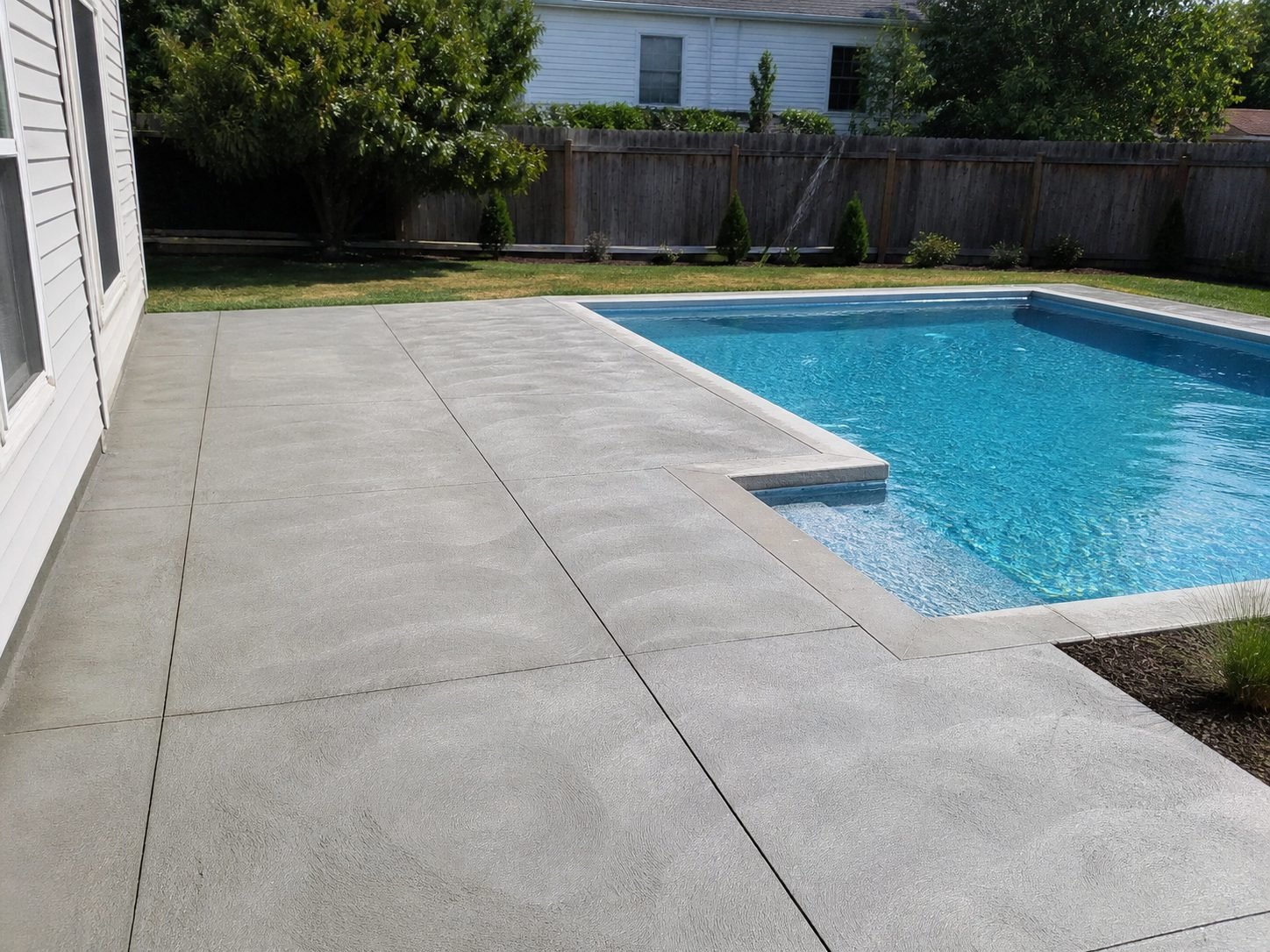
Service Overview
What concrete patio work includes
Concrete patios are poured at 4 inches thick for standard residential use. The project typically involves removing existing concrete or other surface material, excavating and compacting the sub-base, setting forms to the correct grade with the right drainage slope, then pouring, finishing, and cutting control joints.
Most residential patio projects we handle are either replacements of deteriorated slabs or new additions. If you're connecting the patio to existing concrete — the house slab, a sidewalk, or a driveway — we address the transition grade at that connection point.
Common reasons for this service
- Replacing a cracked or settled patio. Patios poured in the 1960s through 1980s are frequently past their service life in north KC — clay soil movement and freeze-thaw cycling accelerate deterioration.
- Adding a new outdoor living area. Creating space for outdoor furniture, a grill setup, or a seating area where none existed before.
- Improving drainage away from the house. Patios that slope toward the foundation or drain poorly against the house wall create water intrusion problems over time.
- Extending an existing patio. Adding area to a patio that's too small for current use — connecting a new pour to the existing edge.
- Replacing a wood deck with concrete. Concrete requires less ongoing maintenance than wood and doesn't rot, splinter, or require annual treatment.
- Creating a defined outdoor space. Patios provide clear structure to the backyard — defined space for furniture, containers, and landscaping.
What Matters
The technical factors that determine whether this project lasts.
These aren't variables that show up on a finished surface — they're what's underneath it.
Drainage slope away from the house
The most critical factor on a patio pour. Water needs to move away from the foundation. We grade the base and set forms to create the correct slope before the concrete goes down.
Base prep in clay soil
Clay beneath north KC patios moves with moisture. Proper excavation depth and a compacted gravel base reduce movement-related cracking.
Control joint placement
Joints placed at the right intervals for the patio's dimensions direct shrinkage cracks where they won't matter. Improperly jointed slabs crack randomly across the surface.
Connection to existing concrete
Where a new patio meets the house slab, existing walkway, or steps, the transition needs to be addressed correctly to avoid differential settling.
Finish selection
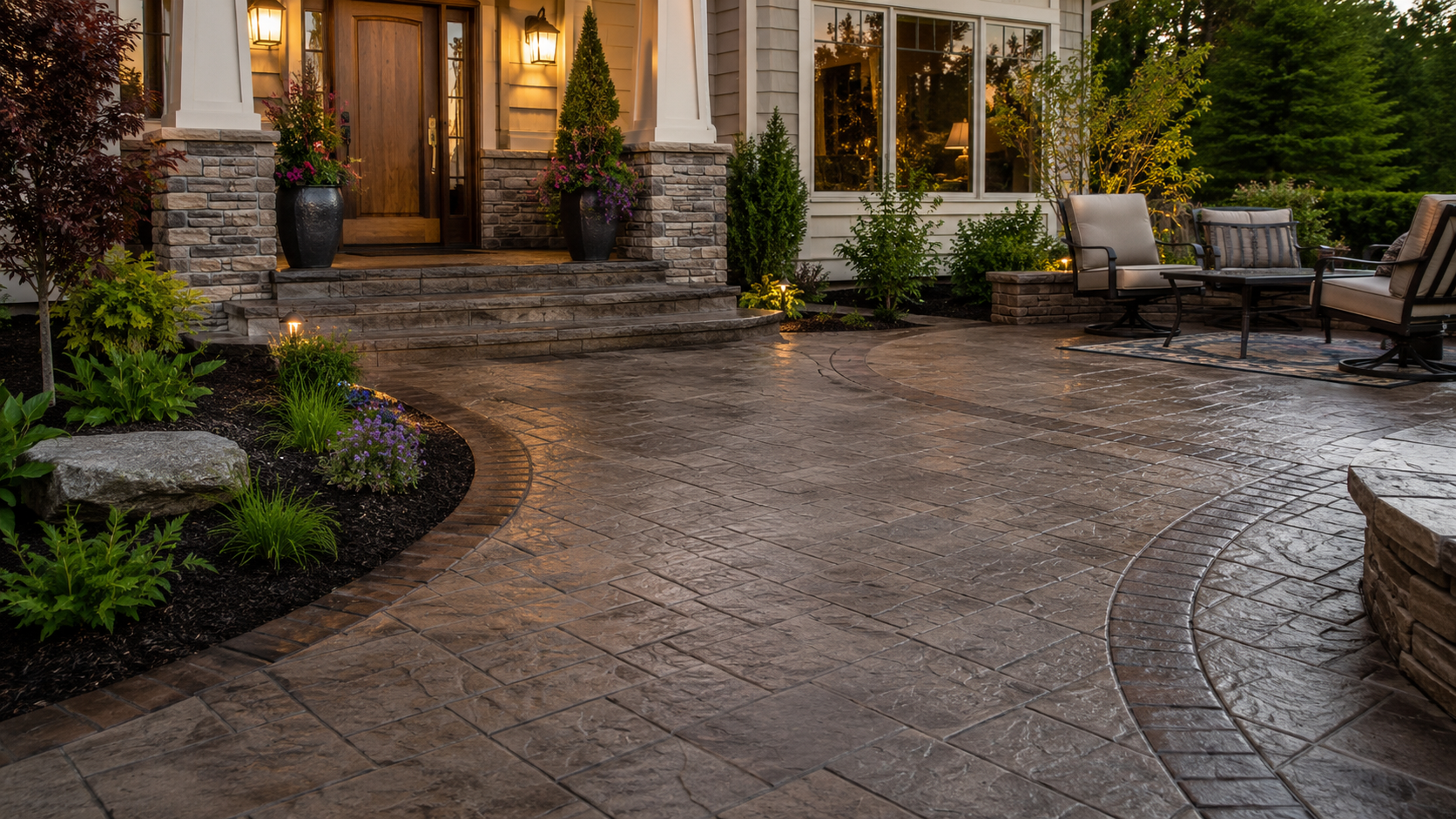
Standard broom finish is durable, low-maintenance, and appropriate for most patios. Stamped and decorative options are available with different maintenance requirements.
Curing conditions
Missouri's temperature swings — hot summer pours and cold-weather pours — both require active management during the curing period.
North KC Conditions
How Gladstone's soil and climate affect concrete patios.
Clay soil drainage
Expansive clay beneath north KC patios creates drainage challenges — water doesn't drain quickly through the soil, which matters for both the base prep and the finished surface slope.
Tree root pressure
Mature trees in older Gladstone neighborhoods can push roots under patio slabs, creating lifting and cracking. Tree proximity is assessed at the site visit.
Freeze-thaw cycling
30–40 freeze-thaw cycles a year put repeated stress on exterior concrete surfaces. Air-entrained concrete mix reduces freeze-thaw damage to patios.
Seasonal moisture variation
Clay soil swells significantly in wet springs and shrinks in dry summers, creating seasonal ground movement that stresses slab edges.
The Process
From your first call to the finished project.
Request an estimate
Call or submit a form with your patio project details.
Site visit
We assess the existing surface, drainage situation, tree proximity, and grade requirements before scoping the work.
Written scope and price
You receive a written estimate with dimensions, spec, finish, and fixed price.
Demo, base prep, pour, finish
Existing surface removed, sub-base excavated and compacted, forms set to grade, concrete poured to spec, finished, and control joints cut.
Curing walkthrough
We cover curing timeline and care instructions before leaving the job site.
FAQ
Common questions about concrete patios in Gladstone, MO.
How much does a concrete patio cost in Gladstone, MO?
Concrete patios typically run $6–$10 per square foot for a standard broom finish, and $12–$18 per square foot for stamped concrete. A 200 sq ft standard patio runs roughly $1,200–$2,000; stamped at the same size runs $2,400–$3,600. Drainage work, demo of existing material, and site prep affect the total.
Should I seal my concrete patio?
Yes — sealing extends the surface life by reducing water penetration and protecting against freeze-thaw scaling. Penetrating sealers are generally preferred over film-forming sealers for patios. New concrete should cure for at least 28 days before sealing. Plan to reseal every 2–5 years depending on traffic and exposure.
Can you connect the patio to my existing concrete steps or walkway?
Yes. We address the transition at the site visit — matching grade, managing drainage at the connection point, and using the right joint treatment to reduce differential movement.
What's the difference between standard and stamped concrete for a patio?
Standard concrete is poured and finished with a broom texture — durable, low-maintenance, and the most cost-effective option. Stamped concrete uses textured mats pressed into the concrete before setting, creating patterns that mimic stone, brick, or other materials. Stamped requires sealing and is generally not repairable to match if damaged.
How do I prevent cracking in my new patio?
Proper base preparation, air-entrained concrete mix, and correctly placed control joints are the three most important factors. Beyond installation, avoid using deicing salts on the surface and seal periodically to reduce water penetration.
Serving north Kansas City
Ready to talk about your patio project?
Free estimates for concrete patios across Gladstone and north Kansas City.