
Residential · Gladstone, MO
Concrete sidewalk and walkway contractor in Gladstone, MO — new installation and replacement.
Sidewalk and walkway projects in north KC range from replacing individual heaved panels that have become a trip hazard, to installing a complete front entry walkway from the street to the door. Whether it's a public sidewalk repair, a front entry path, a route to an outbuilding, or a property perimeter walk — proper drainage and panel replacement planning matter. We handle the full range for homes and businesses across north Kansas City.
Free Estimate
Tell us about your project
We respond within one business day.
The Finished Result
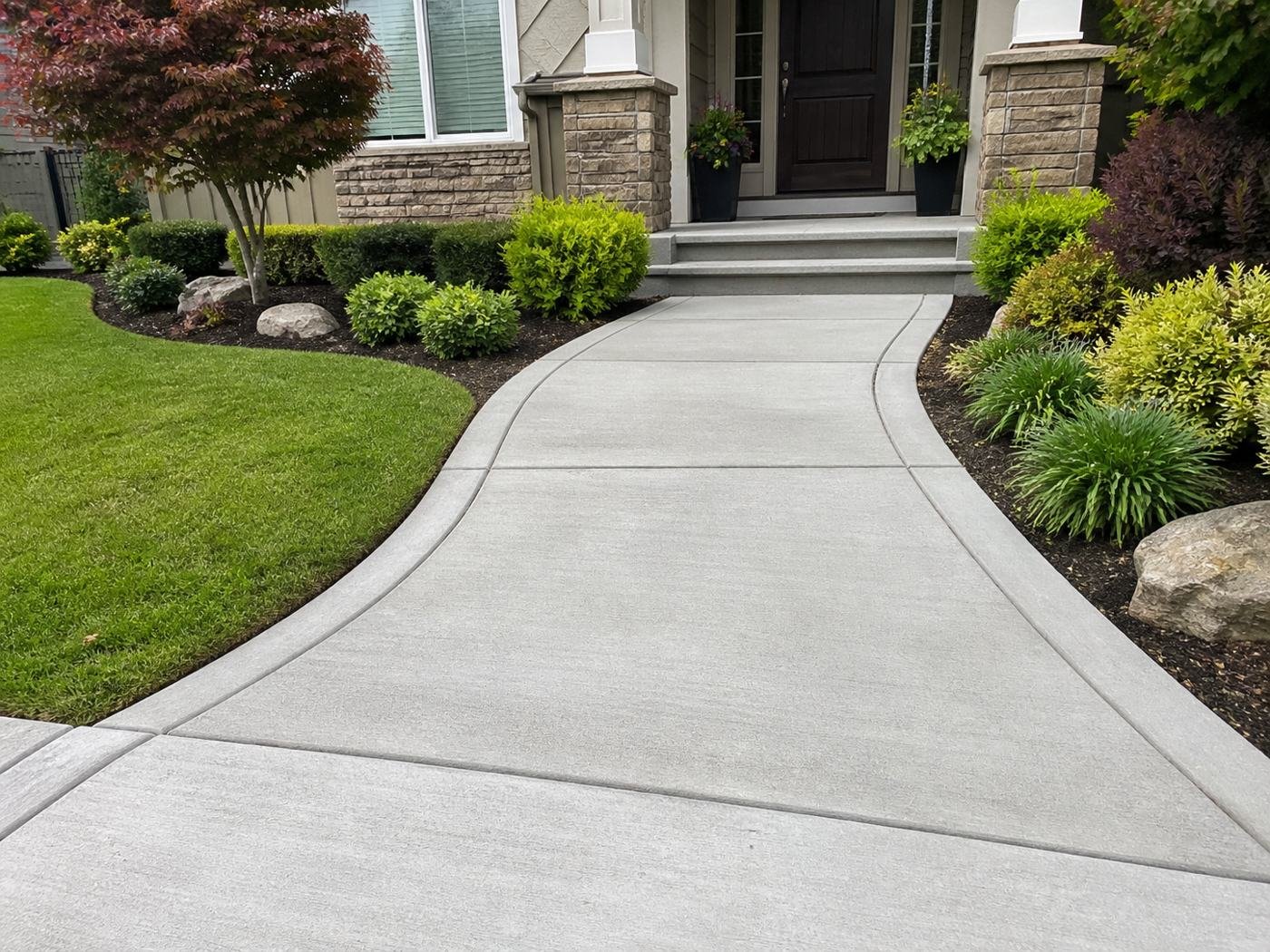
Safe, level paths that eliminate trip hazards and improve access.
Heaved, cracked, or settled sidewalk panels create trip hazards that get worse each winter. Properly installed replacement concrete — at the right grade, with the right base prep, and with correctly placed control joints — eliminates those hazards for decades.
Request Free Estimate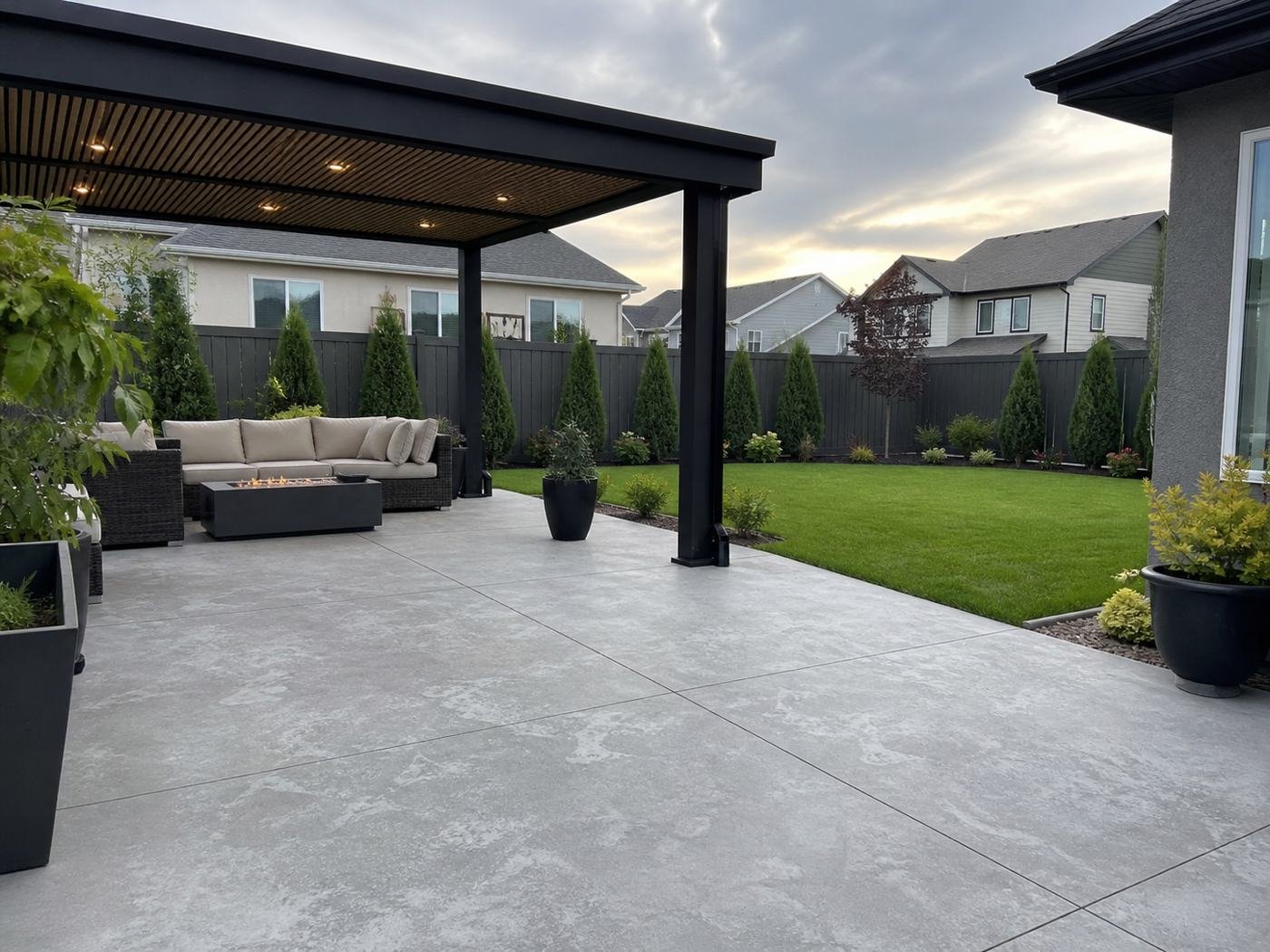
Service Overview
What sidewalk and walkway work includes
Sidewalk projects range from replacing individual heaved or cracked panels on a public sidewalk to installing a complete front entry walkway from the street to the door. The scope depends on how much of the existing concrete needs to come out and whether the base beneath it is still intact.
Walkways are typically poured at 4 inches thick, 3 to 5 feet wide depending on use. Control joints are cut every 4 to 5 feet for sidewalks. For front entry walkways, we address grade transitions at the steps, driveway connection, and public sidewalk if applicable.
Common reasons for this service
- Heaved or settled panels. Freeze-thaw cycling and tree root pressure are the most common causes of sidewalk heaving in north KC neighborhoods. Panels that are raised more than 1/2 inch above adjacent panels are a trip hazard.
- Widespread cracking. When cracking runs across multiple panels or the base has deteriorated, panel-by-panel replacement or full sidewalk replacement is more cost-effective than patching.
- Front entry walkway installation. Creating a defined path from the street, driveway, or parking area to the front door — improving curb appeal and access.
- Path to garage or outbuilding. Adding a concrete walking path to a detached garage, workshop, or backyard structure.
- City-required replacement. Municipalities sometimes require homeowners to replace sidewalk panels that exceed trip-hazard standards. We handle the concrete work — permit requirements vary by city.
- Improving safe access around the property. Creating a clear path around the perimeter of a home or commercial property for maintenance access or regular use.
What Matters
The technical factors that determine whether this project lasts.
These aren't variables that show up on a finished surface — they're what's underneath it.
Grade at transitions
Where the walkway meets steps, the driveway, or the public sidewalk, grade transitions determine whether the finished surface is safe and water-shedding.
Trip hazard elimination
The goal of most sidewalk replacement projects is eliminating existing hazards and preventing new ones. Panel height differentials of more than 1/2 inch create trip hazards.
Control joint spacing
Sidewalk control joints are typically placed every 4 to 5 feet for a standard-width sidewalk. Correct joint spacing directs cracking to the joint instead of randomly across the panel.
Width for intended use
Front entry walkways are typically 3 to 4 feet wide. Service access paths can be 2 to 3 feet. ADA-accessible routes require at least 36 inches of clear width.
Tree root considerations
In older north KC neighborhoods, mature trees are often the cause of sidewalk heaving. Removing the tree root source or using root barriers affects whether replacement will last.
North KC Conditions
How Gladstone's soil and climate affect sidewalks & walkways.
Tree root pressure in older neighborhoods
Gladstone and north KC's mature neighborhood trees are a significant cause of sidewalk panel heaving. Where root pressure is the root cause (literally), we discuss options at the site visit.
Freeze-thaw cycling
Panels that drain poorly hold water that freezes and expands in the joints, accelerating heaving and cracking over time.
Clay soil settlement
Clay settlement beneath sidewalk panels — particularly along slopes or near drainage areas — causes panels to drop unevenly.
The Process
From your first call to the finished project.
Request an estimate
Call or submit the form — approximate linear footage or area and location help us prepare for the site visit.
Site visit and assessment
We walk the existing sidewalk, identify panels that need replacement, assess drainage, and look at root pressure or settlement causes.
Written scope
Written estimate specifying which panels are replaced, the spec, and fixed price.
Demo, base prep, pour, finish
Panels are removed, sub-base checked and compacted, forms set to grade, concrete poured, broom-finished, and control joints cut.
Cure period
Foot traffic off for 24–48 hours. Full cure at 28 days.
FAQ
Common questions about sidewalks & walkways in Gladstone, MO.
How much does sidewalk replacement cost in Gladstone, MO?
Concrete sidewalk replacement typically runs $8–$15 per square foot depending on scope, access, and whether base repair is needed. Individual panel replacement costs more per panel than full sidewalk replacement because of mobilization. We provide a written estimate with fixed pricing after the site visit.
Who is responsible for the public sidewalk in front of my house?
In most Gladstone-area municipalities, the homeowner is responsible for maintaining the public sidewalk in front of their property even though it's on the public right-of-way. If you've received notice from the city about a sidewalk violation, we can address the concrete work — check with your city for permit requirements.
Can you replace just the damaged panels instead of the whole sidewalk?
Yes, panel-by-panel replacement is common and often the right approach when most of the sidewalk is still in good condition. The key question is what's causing the specific panel failures — if the cause is systemic (base failure throughout), replacing panels piecemeal leads to recurring repairs.
What's the minimum width for a residential walkway?
Front entry walkways are typically 3 to 4 feet wide for residential use. ADA-accessible routes require a minimum 36 inches of clear width. Service access paths are commonly 2 to 3 feet. We discuss appropriate width for your project at the site visit.
How do I prevent sidewalk panels from heaving again?
The most important factor is addressing the underlying cause — tree roots, poor drainage, or soil settlement. If the cause isn't addressed, new concrete will follow the same pattern. We assess the cause at the site visit and discuss options.
Serving north Kansas City
Ready to talk about your sidewalk project?
Free estimates for sidewalks & walkways across Gladstone and north Kansas City.