Repair · Gladstone, MO
Concrete repair and replacement in Gladstone, MO — honest assessment before any work starts.
The most important part of any concrete repair or replacement project is diagnosing what's actually causing the problem — because the right fix depends entirely on whether the sub-base is still intact. A patch over failed base material will crack again inside a season or two. We handle concrete repair and replacement for driveways, patios, sidewalks, and flatwork across north Kansas City, starting with an honest look at what's underneath before any scope gets written.
Free Estimate
Tell us about your project
We respond within one business day.
The Finished Result
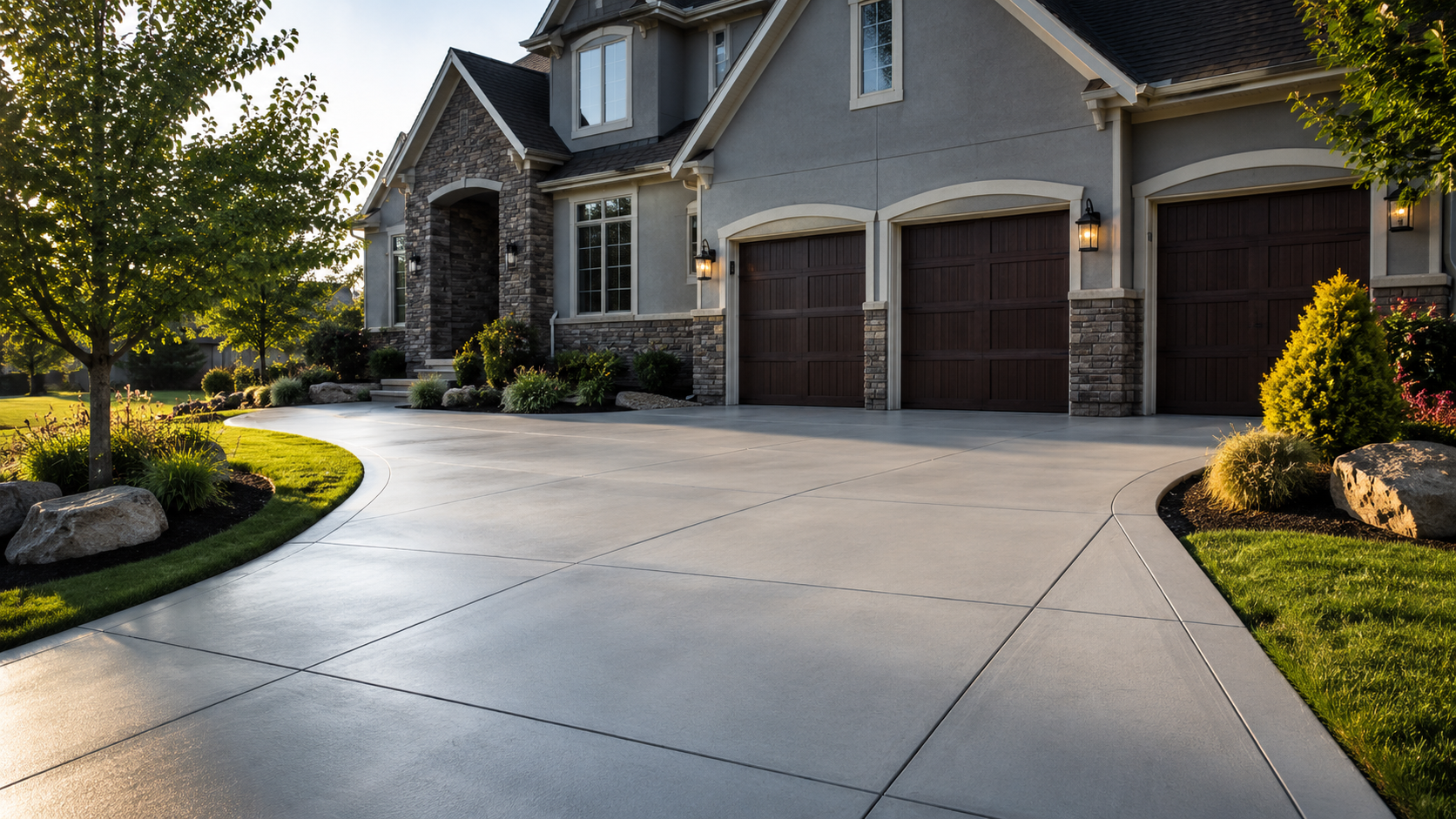
The right fix — not just the cheapest one this season.
Patching over a failed sub-base costs you twice — once for the patch and again when it fails. A properly assessed repair or replacement addresses the actual problem: base condition, drainage, joint placement, or concrete age. We tell you what we see before recommending a scope.
Request Free Estimate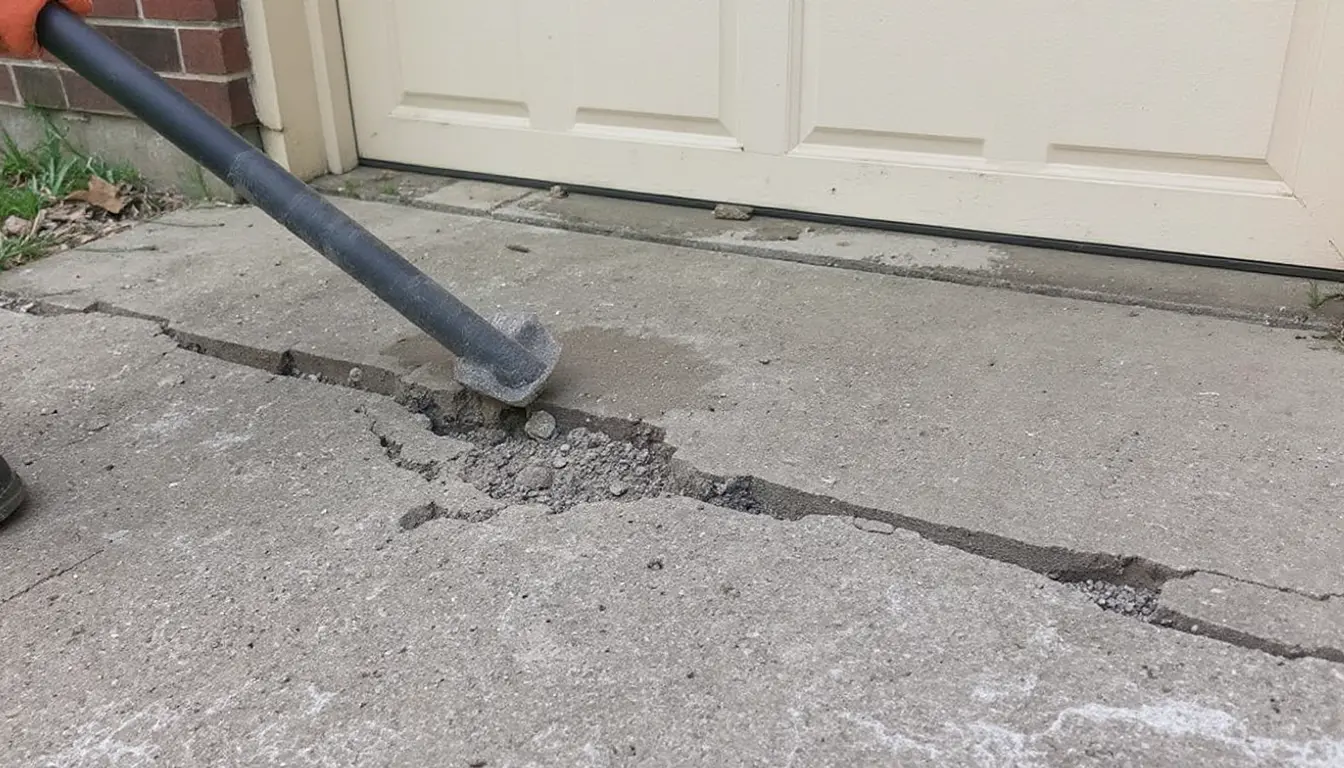
Service Overview
The diagnosis comes first
Most concrete calls come in as 'I have a cracked driveway' or 'my patio is settling.' The visible condition tells you part of the story. The base condition tells you the rest — and you can't see it without looking at what's underneath.
At the site visit, we assess both. If the base is intact and drainage is working, surface repair or resurfacing may be appropriate. If the base has failed — from clay movement, drainage problems, or erosion — the right call is replacement with correct base prep. Patching over a failed base repeats the cycle every season or two.
Common reasons for this service
- Widespread cracking. When cracking runs across most of the slab, the base is usually the cause. Surface patches won't hold if the ground underneath is still moving.
- Settling or heaving panels. Panels that have dropped or risen relative to each other indicate base failure or frost heave. Trip hazards are both a liability and a safety problem.
- Surface spalling. Scaling and spalling — concrete surface flaking away — can be caused by deicer damage, poor mix spec, or freeze-thaw cycling on incorrectly specified concrete.
- Trip hazards. Panel height differentials, raised edges, or cracked surfaces that create tripping hazards — particularly significant on public sidewalks or commercial properties.
- Previously patched areas cracking again. If a patch job failed within a season or two, it's a strong indicator that the base problem wasn't addressed. Replacement is usually the right next step.
- Water pooling or drainage failure. Concrete that no longer sheds water correctly — from settling, heaving, or subsurface changes — creates both surface deterioration and potential water intrusion problems.
What Matters
The technical factors that determine whether this project lasts.
These aren't variables that show up on a finished surface — they're what's underneath it.
Sub-base condition — the determining factor
Whether repair or replacement is appropriate comes down to the base. Intact base + isolated damage = repair candidate. Failed base + widespread damage = replacement.
Type and pattern of cracking
Random cracking across a large area suggests base failure. Cracking at predictable intervals (every 10–15 feet) in an otherwise sound slab suggests control joint problems. The pattern matters.
Settlement direction and uniformity
Uniform settling might indicate overall base compression. Differential settling — where one section dropped more than another — indicates localized base failure or drainage problem.
Drainage situation
If water is pooling against a structure or draining toward it, that's both a cause of current damage and a problem that needs to be addressed in any repair or replacement scope.
Age of the concrete
Concrete approaching 30+ years in north KC that is showing widespread issues is usually more cost-effective to replace than to repair.
North KC Conditions
How Gladstone's soil and climate affect concrete repair & replacement.
Expansive clay causes settling and cracking
North KC's clay soil expands when wet and contracts when dry. That seasonal movement stresses slabs from underneath — causing cracking and settling that looks like surface damage but is base-driven.
Freeze-thaw accelerates surface failure
30–40 freeze-thaw cycles per year work water into existing cracks, expand it, and widen those cracks every cycle. The rate of deterioration in inadequately specified concrete is significantly faster here than in milder climates.
Deicer damage is common in north KC
Road salt and deicer chemicals cause surface scaling — particularly on concrete that wasn't correctly air-entrained or was sealed too early. Scaling is a common repair trigger on 5–15 year old concrete in this area.
Older housing stock often has original concrete
Much of north KC's residential concrete flatwork was poured between 1955 and 1985. That concrete is frequently past its practical service life.
The Process
From your first call to the finished project.
Request an assessment
Call or submit the form — describe what you're seeing, approximate location and size.
Site visit and diagnosis
We look at the visible condition and assess the sub-base situation before recommending anything.
Honest recommendation
We tell you whether repair, resurfacing, or replacement is the right call — and why. If repair is appropriate, we scope that. If replacement is the right answer, we scope that.
Written scope and price
Written estimate with fixed price. No surprise add-ons once work starts without your approval first.
Work and completion walkthrough
Repair or replacement completed to spec, with a walkthrough of the work and care instructions before we leave.
FAQ
Common questions about concrete repair & replacement in Gladstone, MO.
How do I know if I need repair or replacement?
The key indicator is base condition. If cracking is isolated, the slab is still level, and the base underneath is intact, repair can work. If cracking is widespread, the slab has settled or heaved, the base has failed, or previous patches have already cracked again, replacement is the appropriate call. We assess this at the site visit — it's not something that can be determined over the phone.
Why does patching fail so quickly on some concrete?
Patches applied over a failed sub-base don't address the underlying problem. The ground beneath the slab is still moving, and the new patch sits on an unstable platform. When the base shifts again — which it will in a freeze-thaw cycle — the patch cracks. The correct fix is addressing the base, not just the surface.
Can concrete be resurfaced or overlaid instead of replaced?
Resurfacing (applying a new layer over existing concrete) is sometimes appropriate for surfaces that are structurally sound but have surface deterioration — scaling, minor spalling. It's not appropriate when the sub-base has failed or when the existing slab is settling, cracked through, or heaving. If the slab needs to be level and stable for the overlay to work, the base conditions have to support that.
What causes concrete to crack?
The most common causes in north KC: missing or incorrectly placed control joints, failed sub-base from clay movement or erosion, freeze-thaw cycling on concrete that wasn't air-entrained, deicer damage on young concrete, and tree root pressure. Most cracking in older Gladstone-area concrete is a combination of multiple factors working over 20–30+ years.
How long does concrete replacement take?
Demo and base prep typically take one day. Pour and finishing take one to two days depending on size. Then 7 days for the curing period before vehicle use. We'll give you a project-specific timeline in the written estimate.
Can you repair concrete in cold weather?
Yes, with the right precautions. Cold-weather repairs require heated materials, insulated curing blankets, and ambient temperature monitoring. We don't do repair or replacement work when overnight temperatures are expected to drop below freezing during the first 24 hours without a cold-weather protection plan.
Serving north Kansas City
Ready to get an honest assessment?
Free estimates for concrete repair & replacement across Gladstone and north Kansas City.